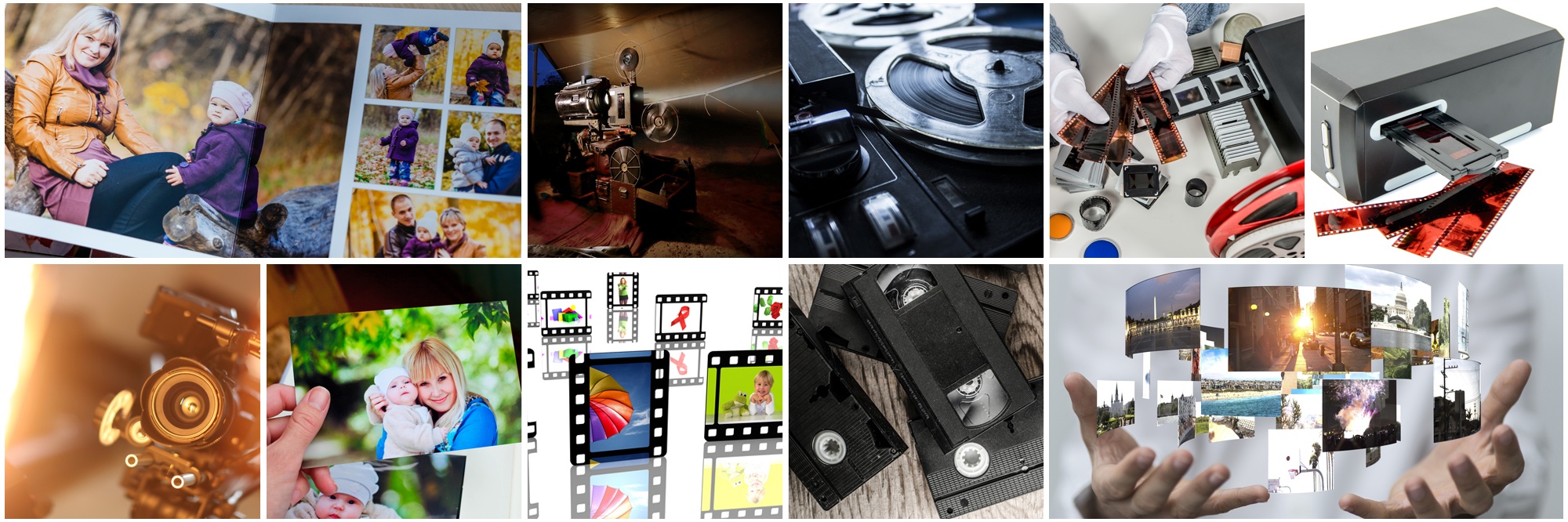
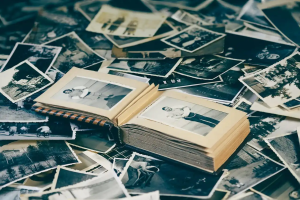
A time capsule buried in a box can rust, rot, or get lost in a move. A digital time capsule for kids never has that problem. It lives online, backed up in more than one place, ready to open whenever your family decides the moment is right.
If you want to create a digital memory capsule that your children or grandchildren will actually treasure, start with what you already have.
Old photo albums, home videos, report cards, and drawings are sitting in boxes right now, slowly fading or gathering dust.
Many families choose to digitize their most important life events first, since these are the items most at risk of damage, tearing, or simply disappearing during a move or a flood.
Once everything is digital, you can organize it, add new memories as the years go by, and set it aside for a future reveal that your family will genuinely look forward to.
Today, we will take you through exactly how to do that, from picking what goes in to choosing the day it finally gets opened.
What to Include in Your Time Capsule?
Pick items that tell a real story about who your family is right now. A good capsule usually includes:
- Photos: first day of kindergarten, birthday parties, family road trips, holiday gatherings, and everyday moments like a Saturday morning at the kitchen table.
- Videos: a baby's first steps, a dance recital, a graduation, or a shaky home video of a family cookout.
- Audio messages: a grandparent telling a favorite childhood story, a voice memo wishing a future birthday, or a recording of a child's laugh at age five.
- Documents: report cards, sports certificates, handwritten letters, and even a hospital bracelet from the day a child was born.
- Artwork: crayon drawings, finger paintings, school projects, and handprint or footprint keepsakes.
This mix is what makes a capsule feel alive years later. A single photo tells you what someone looked like. A voice recording, a report card, and a crayon drawing together tell you who they were.
Digitizing Physical Items: Drawings, Report Cards, and Handprints
Paper fades, ink smudges, and crayon drawings tear at the folds. Before any of that happens, get these items scanned at a high resolution so every detail survives.
A flatbed scanner works well for flat items like report cards, letters, and drawings, while thicker items like plaster handprints or 3D crafts are better photographed under good lighting from multiple angles. A few things to keep in mind when digitizing:
- Scan at a minimum of 300 DPI for text documents and 600 DPI for artwork with fine detail.
- Save a master copy in an uncompressed format before creating smaller versions for sharing.
- Label each file with the date, the child's age, and a short description while the memory is still fresh.
- Handle original items with clean, dry hands to avoid smudging fragile ink or crayon.
If you have a large stack of items or fragile heirlooms you don't want to risk damaging yourself, this is exactly the kind of project a professional scanning service is built for.
Recording Audio and Video Messages
Pairing your scanned photos and documents with short audio or video messages is one of the most meaningful ways to preserve memories for future generations. Some ideas that work well for a family time capsule:
- Record a parent reading a bedtime story out loud so a grown child can hear it again someday
- Ask grandparents to share one memory from their own childhood on camera
- Have a child describe their favorite toy, best friend, or dream job at their current age
- Record a short "message to my future self" video around each birthday
Keep these recordings short and unscripted. A two-minute clip of a child talking naturally about their day is often more valuable than a polished, rehearsed speech.
Organizing by Year, Milestone, or Theme
A time capsule with hundreds of unsorted files is overwhelming to open, even decades from now. Organize as you go instead of waiting until the end. Three approaches tend to work best:
- By year: one folder per year, containing everything from those twelve months
- By milestone: separate folders for first steps, first day of school, graduations, and other major events.
- By theme: folders for holidays, vacations, everyday moments, and family traditions.
Whichever system you pick, stay consistent, and consider using the best apps for sharing digitized photos with family so relatives can contribute their own photos and recordings to the same collection. A digital time capsule for kids works best as a group project, not a solo one.
Storage Strategy: Making Sure Files Survive 20+ Years
A time capsule only works if the files are still readable decades later, and technology changes fast. A folder saved on one old laptop is not a safe long-term plan. Follow these basics to build a capsule that actually lasts:
- Save files in widely used formats like JPEG for photos, MP4 for video, and PDF for documents, since these are unlikely to become obsolete.
- Follow the 3-2-1 rule: keep three copies of every file, on two different types of storage, with one copy stored somewhere off-site.
- Use at least one cloud storage service alongside a physical backup like an external hard drive.
- Check your files every few years to make sure nothing has become corrupted or lost.
Getting this part right matters just as much as scanning the items in the first place. If you're unsure where to start, a good resource on storing and accessing your digital media walks through the safest long-term options in more detail.
Setting a Future "Open Date" and Creating a Reveal
A time capsule needs a purpose beyond just sitting in storage. Pick a specific date or milestone to open it, such as a child's eighteenth birthday, a high school graduation, or a wedding day.
Write the date down somewhere everyone will remember, like a calendar reminder set years in advance or a note in a family group chat.
When the day arrives, make the reveal an event rather than a quick scroll through a folder. Gather the family together, play the video messages out loud, and look through the photos as a group.
This turns family time capsule scanning from a one-time project into a shared family memory in itself, one that connects the people who created it with the people opening it years later.
Start Your Family's Digital Time Capsule Today
A digital time capsule for kids doesn't need to be complicated, but it does need a solid start. The best time to begin is now, before more photos fade, more drawings get thrown away, and more voices go unrecorded.
If you have boxes of photos, old home videos, or fragile documents you want to preserve memories for future generations, professional help makes the process faster and safer than doing it alone.
Check out all our digitization services to see how Smooth Photo Scanning can help your family create digital memory capsule content that's ready to store, share, and open for generations to come.