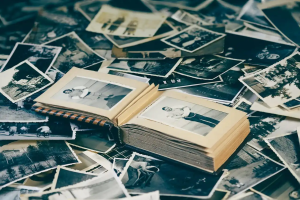
Family photographs are precious artifacts of identity and emotion. They serve as visual anchors for memories and generational continuity. And when families digitize those treasured prints through professional image scanning services, the next step often raises a critical question:
Should you rely on automated AI tools like AI photo colorization for quick fixes, or invest in curated professional photo retouching services that prioritize historical fidelity?
This decision matters, especially when the image in question is part of a legacy archive. Modern technology can provide speed and convenience, but when your family history is at stake, precision and authenticity should guide your choice.
The Rise of the Algorithm: What is AI Photo Restoration?
At its core, AI photo restoration uses machine learning to analyze and reconstruct damaged or faded photographs. Many modern tools leverage generative models, such as GANs (Generative Adversarial Networks) or transformer architectures that learn from large image datasets to predict missing information.
AI systems can perform a range of improvements, including:
- Scratch and dust removal
- Contrast enhancement
- Auto-sharpening
- AI photo colorization
These tools often deliver instantaneous results, which makes them appealing for casual users or quick sharing on social media.
How AI photo colorization works:
- The model detects grayscale tones.
- It predicts likely hues based on patterns in its training set.
- Colors are applied and blended into the original image.
This automated process can produce vivid colors quickly but with potential trade-offs. Importantly, AI does not “know” the historical truth of the subject; it predicts likely visual patterns, not exact historical facts.
Automatic colorization and restoration are essentially predictive modeling, not factual reconstruction. This has significant implications for heritage images where color accuracy is tied to historical context.
The Human Touch: What Happens in Professional Retouching?
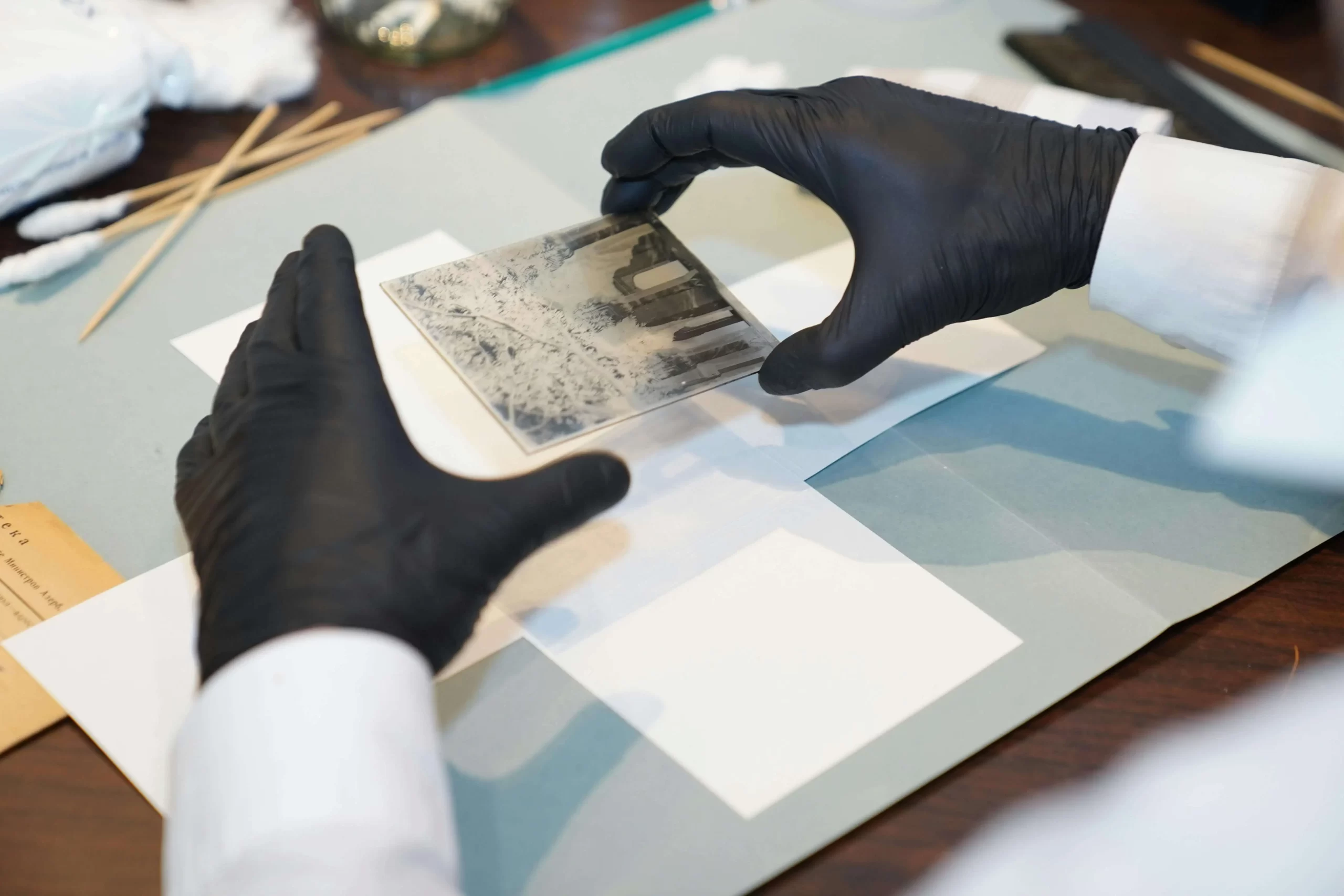
While automation can be fast, professional photo retouching services deliver restoration through intentional, human-driven processes grounded in expertise, context, and historical research.
Smooth Photo Scanning separates scanning from restoration:
- Image scanning services capture all original detail at high resolution.
- Restoration specialists then work manually to preserve the integrity of the image without guessing.
Professional Retouching Workflow (step by step)
Professional retouchers generally follow:
- Detailed inspection: Analyzing damage type and photographic media.
- Manual repair of scratches/folds: Reconstructing pixels with fine control.
- Grain and texture preservation: Avoiding artificial smoothing that erases character.
- Color analysis with context: Researching era-accurate hues and pigments.
These decisions require visual skill, historical knowledge, and craft—not automated pattern generation.
Professional photo retouching services are rooted in intentional correction rather than pattern-based guessing, providing a reliable way to preserve your family’s visual legacy.
The Pros and Cons of AI Photo Restoration
The Benefits: Speed, Accessibility, and Low Cost
AI-powered restoration offers:
- Rapid results.
- Broad accessibility often via phone apps.
- Lower up-front cost compared with manual restoration.
For casual use, such as posting an old family photo to social media, AI photo colorization can be an engaging and fun option. In most cases, a professional photo restoration service produces superior long-term results.
However, speed and cost should not be confused with accuracy, especially for archival images.
The Pitfalls: “Hallucinations” and Loss of Authentic Detail
A well-documented limitation of generative AI models is the phenomenon known as hallucination, the generation of details that appear plausible but have no basis in the original source. In the context of text, this can mean fabricated facts. In images, it can mean invented facial features, shading, or object details.
For example:
- AI may invent eyelashes, teeth, eyes, or hair details that never existed.
- Fabric patterns or textures may be replaced with statistical guesses.
- Facial features may look plausible, but not representative of the actual person.
This happens because AI learns patterns and has no built-in mechanism to verify historical authenticity. It is, in essence, a statistical approximation, not a historical reconstruction.
AI “hallucination” produces confident and plausible errors. That’s a major concern when preserving true family lineage images.
Why Professional Human Retouching Wins for Heritage Photos?
AI systems guess color based on patterns in their training data. But historical photos require decisions rooted in context:
- What dyes and chemicals were available in a given era?
- What were common clothing colors?
- Was the photograph hand-tinted originally?
These are researched decisions made by humans, not statistical guesses.
A professional retoucher can cross-reference textile, fashion, and historical photography documentation to achieve hues that are true to the time, not just visually plausible.
Structural Repair: Fixing Damage Without Smudging
AI tools often address damage by smoothing over areas, which can remove texture and blur details. By contrast, expert retouchers:
- Rebuild torn edges with precision.
- Maintain grain structure.
- Preserve visual depth and shadow detail.
This level of fidelity matters when the image is an archive item, not just a casual snapshot.
| Feature |
AI Tools |
Professional Photo Retouching Services |
| Scratch removal |
Often blurs surrounding pixels |
Controlled reconstruction |
| Fold/crease correction |
Smooths everything |
Recreates shadows and contrast |
| Texture preservation |
Often lost |
Maintained with care |
| Historical color context |
Pattern guesswork |
Research-informed decisions |
Contextual and Period Knowledge
A trained retoucher recognizes:
- 19th-century photographic limitations.
- Period clothing details.
- Authentic skin tones for different lighting conditions.
- Era-specific camera artifacts.
AI lacks contextual reasoning. It cannot differentiate between an 1880s portrait and a 1950s snapshot. It only predicts patterns. For heirloom photos, that distinction matters.
The “Uncanny Valley” Effect: Why AI Faces Sometimes Look “Wrong”
When AI reconstructs faces, it often produces features that are almost human, yet subtly off, a phenomenon known as the uncanny valley.
AI systems generate faces by learning statistical correlations of features from a training set. This can lead to unnatural symmetry or glossy skin that makes the subject look less like a real person and more like a synthetic approximation.
This effect is especially pronounced when applied to historical portraits, where authentic imperfections are part of the photo’s character.
Insight:
Real faces are asymmetrical. Historical photos include variable focus, lighting, and grain, which AI often suppresses in favor of “typical” patterns.
When relatives review such images, the emotional disconnect is noticeable:
“It looks like someone else,” is a common reaction.
Colorization: Logic vs. Guesswork
AI assigns colors based on luminance and learned associations. It does not reference historical pigments or era-specific palettes. For instance:
- Dark gray may become navy, but was the garment really navy?
- Foliage might be rendered lush green, even if the original scene was winter.
How Professionals Ensure True-to-Life Color
Professional colorization involves:
- Historical research
- Era-specific pigment references
- Cross-referencing archival samples
A skilled human retoucher often uses AI as an initial tool but finalizes color to reflect authentic historical context rather than pattern probability.
When to Use Which? Choosing the Right Tool for the Job
Use AI for:
- Social media posts
- Quick previews
- Low-value snapshots
- Sparking casual interest in family photos
Use Professional Services for:
- Heritage portraits
- Wedding photos
- Genealogy archives
- Documents being preserved for future generations
For legacy images, professional photo retouching services protect the integrity of your family’s history.
The Best of Both Worlds: How Smooth Photo Scanning Uses Technology and Talent
Modern workflows are not binary. The most effective approach often combines AI tools for efficiency with human expertise for judgment and authenticity.
At Smooth Photo Scanning:
- High-quality image scanning services capture every detail.
- Experts use AI for detection and mapping.
- Human retouchers finalize restoration to honor historical accuracy and emotional truth.
Closing Thoughts
AI photo colorization has democratized access to visual restoration. It allows families to quickly engage with their photos and build a connection. But for meaningful legacy preservation, speed and novelty aren’t enough.
Professional photo retouching services bring:
- Historical accuracy
- Artistic judgment
- Structural integrity
- Context-aware restoration
These qualities matter when the image is part of a living archive, something you will want to pass on to future generations with confidence.
Your family history deserves precision over approximation, truth over pattern, and depth over convenience.
Final Thoughts
AI photo restoration and professional photo retouching services each have places in the modern preservation landscape, but they serve very different purposes.
AI provides accessibility and speed; professionals provide context and accuracy. When it comes to preserving family history, the stakes go beyond aesthetics to include identity, heritage, and truth. The wrong restoration choice can inadvertently erase historical signals or introduce misleading elements into your family story.
By choosing a blend of high-quality scanning and thoughtful human retouching, you are investing in a legacy that withstands the test of time and not just digital filters that fade with versions or trends.
Your family’s story deserves preservation that is authentic, informed, and enduring.