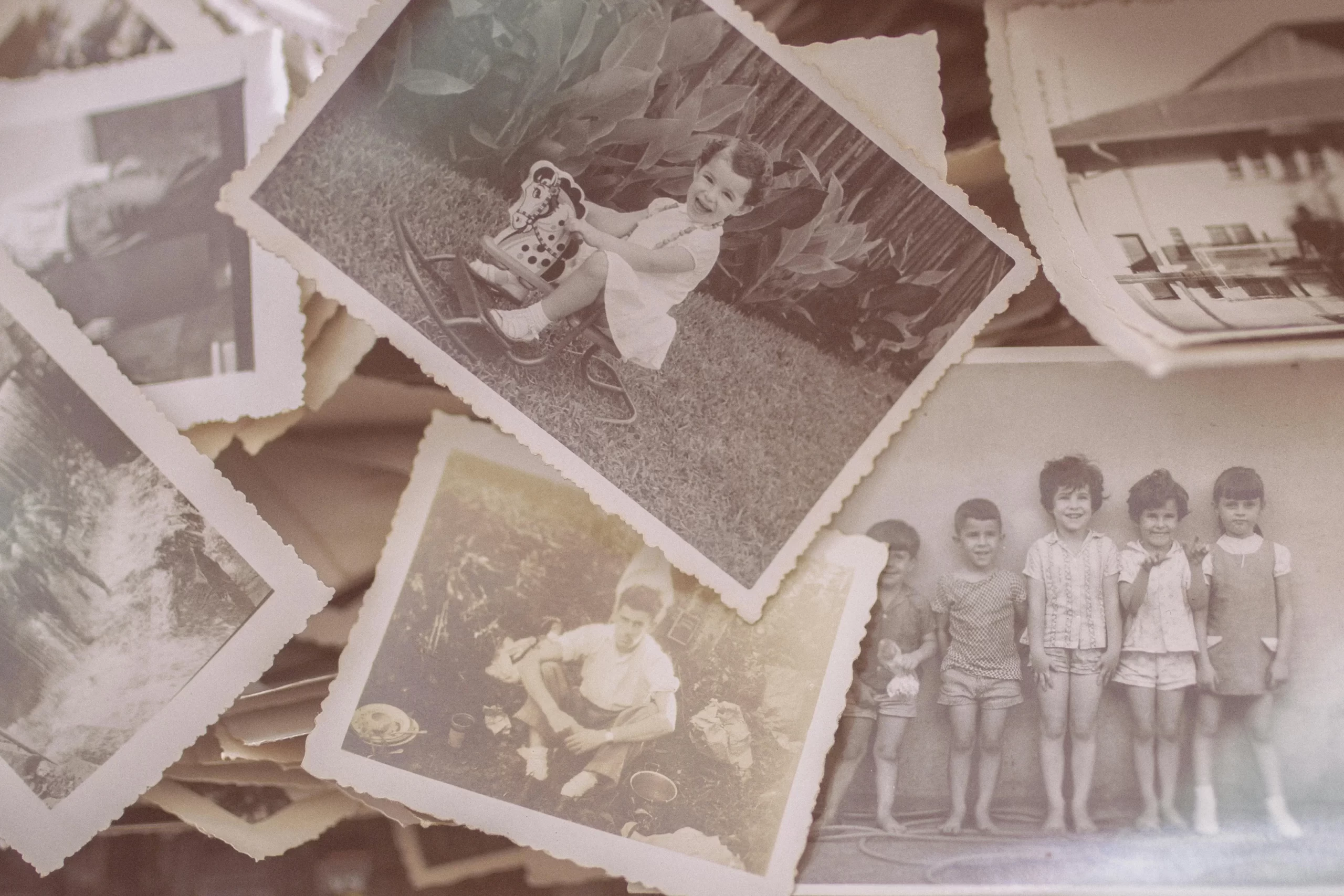
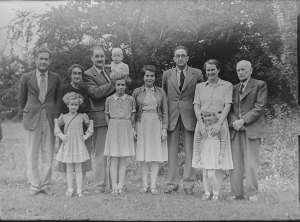
Now that cloud storage is at our fingertips, it feels natural to save everything. Yet when it comes to photo organization, scanning every image is rarely the best strategy.
Today, we will help you approach photo organization strategically, preserve what truly matters, and prepare your collection for professional scanning with confidence.
The “Digital Clutter” Trap: Why You Shouldn’t Scan Everything
While digitizing old photos is essential for preservation, scanning without selection creates three problems:
- Bloated digital folders that are difficult to navigate
- Increased storage costs (cloud or physical media)
- Higher scanning expenses due to volume
What is Photo Culling?
Photo culling is the deliberate process of reviewing, selecting, and eliminating redundant or low-value images prior to digitization.
Think of it as editorial decision-making for your family history.
| Approach |
Outcome |
Long-Term Impact |
| Scan Everything |
Large digital archive |
Hard to navigate |
| Intentional Photo Culling |
Curated collection |
Easier sharing & storytelling |
| Random Sorting |
Inconsistent results |
Family confusion |
The “Keepers” Checklist: 4 Questions to Ask for Every Image
When practicing intentional photo culling, you need a repeatable framework.
Professional archivists use appraisal standards to determine historical value. You can apply similar logic at home while decluttering photos and preparing for digitizing old photos.
Below are four evaluation questions. Ask them for every image in your stack.
1. Does this photo tell a unique family story?
Not every photo documents a story. Some simply capture a random moment with no lasting significance. A “keeper” image should:
- Mark a milestone like a wedding, graduation, or first home.
- Capture a transitional life stage.
- Document a rare family gathering.
- Preserve cultural or generational traditions.
2. Is the subject a primary relative or significant figure?
Effective photo culling requires prioritization. Primary relatives typically include:
- Parents and grandparents
- Great-grandparents
- Siblings and children
- Direct ancestors
Significant figures may include:
- Military veterans in the family
- Immigrant ancestors
- Family business founders
- Community leaders
3. Is this the best version of a specific moment (The “Hero” Shot)?
Film photography encouraged multiple attempts. One birthday party might produce 24 nearly identical prints. Without strategic photo culling, this redundancy multiplies digital clutter after digitizing old photos.
The “Hero Shot” principle solves this problem. A Hero Shot is:
- The sharpest version
- The best facial expressions
- The strongest lighting
- The most balanced composition
4. Does this image evoke an immediate emotional reaction?
Emotion is subjective, but it is powerful. When practicing photo culling, pause for a second before analyzing technical quality. Ask yourself:
- Do I smile immediately?
- Does this image trigger a vivid memory?
- Would I show this to a grandchild with pride?
Emotionally resonant photos are prime candidates for digitizing old photos. However, distinguish between:
- Emotional attachment to the person
- Emotional impact of the image
The “Toss” List: Common Photos That Don’t Need Digitizing
Below are the most common categories of photos that often do not need digitizing.
#1 Technical Failures: Blurs, Blinks, and Bad Lighting
Film photography left little room for error. Unlike today’s smartphones, there was no instant preview. As a result, many printed photos suffer from technical flaws that limit their long-term value.
Common technical failures include:
- Severe blur or motion distortion
- Closed eyes or mid-blink expressions
- Extreme underexposure
- Washed-out overexposure
- Accidental lens obstructions
When photo culling, ask yourself:
- Can I clearly see faces?
- Is the subject identifiable?
- Does this image represent the moment effectively?
If the answer is no, it may not be worth digitizing old photos in this condition.
#2 Scenery Without Context: The 1980s Sunset Dilemma
Landscapes and scenery present a unique challenge during sorting family photos. A sunset from 1986 may be beautiful, but if:
- No people are present
- The location is unidentified
- No event is tied to it
…its long-term family value may be limited. This is what many organizers call the “context test.”
Ask:
- Why was this photo taken?
- Does it represent a meaningful trip or milestone?
- Would someone 30 years from now understand its importance?
If the photo shows:
- A childhood home
- A family-owned property
- A military base before deployment
- A first apartment
…then it passes the context test and deserves consideration during digitizing old photos.
If it’s simply a generic beach, sunset, or mountain scene without a personal connection, it may not warrant preservation.
#3 Redundancy: Choosing the Best from a “Burst” of Shots
Before digital cameras, families often took multiple shots in hopes that one would turn out well. This practice created clusters of near-identical prints. During sorting family photos, you might find:
- Five nearly identical birthday cake photos
- Multiple group shots with slight head tilts
- A sequence of graduation stage walks
This is where strategic photo culling creates the greatest efficiency. Lay duplicates side by side and compare:
- Sharpness
- Facial expressions
- Framing
- Lighting balance
Select one, possibly two Hero Shots. Everything else becomes redundant.
The Mystery Face: Handling Unidentified People from the Past
One of the most difficult categories in sorting family photos is the unidentified person. You may find:
- Portraits with no names
- Group photos with unknown faces
- Extended relatives no one recognizes
These images present an emotional challenge. They feel important, but without identification, their long-term value decreases significantly.
Before discarding:
- Ask older relatives
- Check the back of the photo for notes
- Review family records or genealogical documents
- Share the image with extended family members
If identification fails, consider the following:
- Is the image historically unique (e.g., early 1900s attire, rare setting)?
- Is it part of a larger album that provides context?
- Is it one of the few surviving prints from that era?
If the answer is no, it may not warrant digitizing old photos.
Advanced Culling Strategies: The “3-Pile” Workflow
Once you’ve identified obvious keepers and toss candidates, it’s time to move into a structured system that makes large-scale photo culling efficient and emotionally manageable.
The “3-Pile” Workflow is widely recommended by professional photo organizers because it reduces overwhelm and speeds up sorting family photos without sacrificing thoughtful decision-making.
Instead of debating every single print in isolation, you sort each photo into one of three clearly defined categories:
- Must-Scan
- Heritage
- Peaceful Departure
Pile 1: The “Must-Scan” Essentials
Pile 1 is your highest priority. These images form the foundation of your long-term archive and are the clear candidates for digitizing old photos.
What Belongs in the Must-Scan Pile?
- Major life milestones.
- Clear portraits of primary relatives.
- Rare photographs of older generations.
- Documented family traditions or cultural heritage.
- Historically significant moments like military service, immigration, and the first home.
Pile 2: The “Heritage” Pile (Send to Other Relatives)
These photos may not need to live in your personal archive — but they may hold strong meaning for someone else.
What Typically Falls into the Heritage Pile?
- Photos centered on cousins or extended relatives.
- Duplicate prints from shared events.
- Childhood images of siblings.
- In-law family gatherings.
- Branch-specific family moments.
Pile 3: The “Peaceful Departure” (Discarding with Respect)
This pile includes photos that:
- Fail technical quality standards.
- Have no identifiable subjects.
- Are redundant duplicates.
- Lacks context or historical value.
- Are severely damaged beyond recognition.
Overcoming Sentimentality: Tips for Letting Go
Letting go does not mean dismissing memories. It means refining them.
Below are practical, psychology-backed strategies to make decluttering photos easier and more objective before digitizing old photos.
1. Separate the Memory from the Paper
Once you commit to digitizing old photos, the physical object is no longer the only access point to that moment. Ask yourself:
- Am I keeping this because it’s meaningful?
- Or because it feels risky to discard?
2. Shift from Quantity to Legacy
Imagine your grandchildren opening your digital archive. Would they rather scroll through:
- 4,000 loosely organized images?
- Or 600 carefully curated ones?
Quality increases engagement. Volume often reduces it.
Effective photo culling strengthens storytelling and makes sorting family photos purposeful rather than overwhelming.
3. Work in Structured Time Blocks
Decision fatigue intensifies emotional attachment. Try:
- 30-minute focused sessions.
- One decade at a time.
- One event at a time.
Short sessions maintain objectivity during decluttering photos and reduce burnout.
4. Use a “Pause Box.”
If you can’t decide, create a temporary holding box. Revisit it in 30 days. Distance often clarifies decisions and improves structured photo culling.
5. Remember Professional Archival Standards
Even institutions like the National Archives and Records Administration preserve only a fraction of materials created each year. When you adopt archival thinking, photo organization becomes easier and more confident.
The Financial Benefit: Why Culling Saves You Money
Beyond emotional clarity, disciplined photo culling provides measurable financial benefits. Professional digitizing old photos services typically base pricing on:
- Volume
- Resolution
- Handling complexity
How Decluttering Impacts Cost?
If you reduce your collection by 30% through structured sorting of family photos, you immediately:
- Lower scanning volume.
- Reduce processing time.
- Minimize storage requirements.
- Decrease long-term digital management costs.
Resolution and Cost Considerations
Resolution affects both price and file size.
| Resolution |
Best For |
File Size Impact |
Cost Consideration |
| 300 DPI |
Standard viewing & same-size prints |
Moderate |
Most economical |
| 600 DPI |
Enlargements up to 2× |
Larger files |
Higher processing time |
| 1200 DPI |
Detailed editing & large reprints |
Very large files |
Premium processing |
How to Prepare Your Selection for Smooth Photo Scanning?
Once you’ve completed sorting family photos and finalized your selections, preparation becomes critical. Preparing collections becomes easier with a professional photo editing service. Smooth Photo Scanning’s process includes:
- Secure logging and tracking in their NJ facility
- Hand scanning using state-of-the-art imaging equipment
- Cropping, rotation, and color correction
- Quality control review
- Organized digital folder creation
Organizing by Decade or Event
Chronological grouping is one of the most effective preparation methods. Sort into categories such as:
- 1960s
- 1970s
- 1984 Wedding
- 1992 Family Reunion
- Military Service (1971–1973)
This approach improves:
- Digital folder naming accuracy
- Searchability
- Long-term archive usability
Labeling Envelopes for Digital File Naming
Clear labeling dramatically improves final results. Before sending your collection:
- Use sturdy envelopes or rubber-banded bundles.
- Label clearly with a permanent marker.
- Include names, dates, and event descriptions.
- Maintain original album order when applicable.
Closing Thought
Intentional photo culling is about clarifying it. When you approach sorting family photos with structure and purpose, you transform overwhelming boxes into a curated archive rooted in strong photo organization.
Thoughtful decluttering photos ensures that only meaningful and high-quality images move forward to digitize old photos, reducing clutter while strengthening storytelling.
The result is a streamlined digital collection that is easier to navigate, more cost-effective to preserve, and far more valuable to future generations.