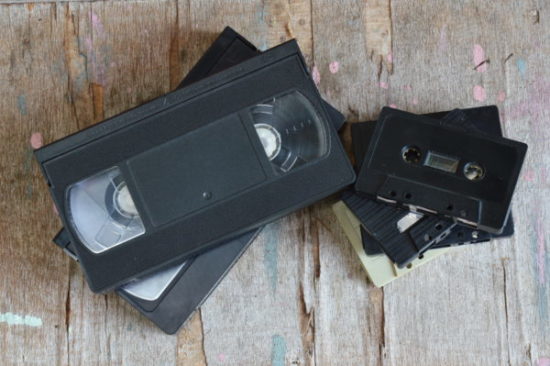
Your videotapes will deteriorate over time, regardless of how you store them and how carefully you handle them. VHS, VHS-C, 8mm, Hi-8, MiniDV & Betamax tapes degrade quickly, as they were never meant to be long term video storage solutions.
In fact, magnetic tapes begin to deteriorate in as little as 5 years after they are recorded. The only way to ensure that your precious home video footage doesn’t fade away is to transfer your ca77nxmcorder and VHS tapes to digital service or DVD as soon as possible.
“The only way to truly protect and save your home video footage is to have your videotapes digitized right away.”
While you’ll want to digitize your home videos right away to ensure their safety and longevity, some people decide to put it on the back burner or want to preserve their original videotapes after they’ve been transferred. This article explains a variety of factors that contribute to the decay of magnetic videotapes like VHS, VHS-C, 8mm, Hi-8, MiniDV & Betamax, and how you can store and care for them to reduce future videotape degradation.
Do VHS Tapes Degrade? The Timeline of Decline
Even under ideal storage conditions, videotapes can begin to lose image and sound quality within 5 to 10 years. The magnetic particles that hold your memories slowly lose their charge, and the binder that holds those particles can dry out, flake, or become sticky.
If you’ve ever wondered how long do VHS tapes last, the answer depends on how they’re stored and handled.
On average, tapes stored in cool, dry conditions may last up to 15 to 20 years before showing major signs of degradation, but their decline is inevitable.
Why Do VHS Tapes Degrade? Key Contributing Factors
Several forces work against the lifespan of your videotapes. These are:
1. Demagnetization
Demagnetization is the process in which magnetic charge is removed. Magnetic particles are what stores information on a videotape. Particles can become demagnetized as a result of being too close to a strong magnet, being exposed to extreme heat and as a result of time. Demagnetization severely affects the videotape transfer quality.
2. Humidity
The binder layer of video tapes is the part that comes in direct contact with the playing machine. This layer can absorb water causing it to become sticky (known as sticky shed syndrome). This renders the tape unplayable and can severely damage a machine if you attempt to play an affected video tape.
Humidity can also encourage fungus growth. Any outside particles can cause information loss from tapes. If you have fungus on any tapes take it to a professional to have it cleaned before attempting to play the tape.
Professional services like Smooth Photo Scanning include VHS tape cleaning as part of the video transfer process to ensure safe playback and preservation.
3. Remanence Decay
This occurs over time as magnetic particles lose their charge. As the particles lose their charge the color of the film becomes weaker, distorting the color of the digital transfer.
4. Frequent Use
Every time you play a video tape some loss of quality or information occurs. While it is not noticeable at first, overtime the quality of the video lessens. The less you play a videotape the better the quality.
5. Old Machinery
Poorly maintained or old machinery can collect dust and dirt. This can lead to scratches, wear and tear on the binder layer, loss of magnetic charge. These all lead to loss of information.
6. Mechanical Stress
Inside every cassette, dozens of tiny moving parts like rollers, guides, and spools pull the tape across the video heads. Each time you play or rewind a tape, the friction between these components creates microscopic abrasions on the tape surface.
Over time, this physical contact wears away the magnetic coating that stores the audio and video signals.
Even gentle use leads to a gradual loss of image sharpness, sound clarity, and color accuracy. So, when people ask, “do VHS tapes degrade over time even if they still play fine?”, the answer is yes, but every spin inside a VCR shortens the tape’s lifespan just a little.
Continuous playback or frequent rewinding all speed up wear and tear.
7. Aging Materials
Another key reason why VHS tapes degrade lies in their very composition. A videotape is a delicate sandwich of materials. The outer casing is made of plastic that can warp, crack, or become brittle over the years, especially if exposed to fluctuating temperatures. Inside, the magnetic tape is coated with a binder, which is a thin chemical layer that holds the magnetic particles responsible for storing your video signal.
As decades pass, the binder begins to dry out and lose adhesion. This results in the dreaded “sticky-shed syndrome,” where the tape literally sticks to the playback heads or itself, causing screeching sounds, playback errors, and permanent data loss.
Even under careful storage, chemical reactions slowly break down these materials, proving that VHS tapes do degrade over time, no matter how cautious you are.
Low-quality or non-archival-grade tapes are particularly vulnerable, deteriorating much faster than professional stock. If you notice a powdery residue, fading colors, or a musty smell, those are warning signs that your VHS tapes are going bad, and the only long-term solution is to digitize them before the damage becomes irreversible.
Do VHS Tapes Degrade Over Time? From Magnetics to Mechanics
You might still wonder, do VHS tapes degrade over time, even when you barely touch them? Sadly, yes. Even if you never play a tape, the magnetic charge gradually fades.
Signs That VHS Tapes Are Degrading
Look for these early warning signs before your tapes become unplayable:
- Muffled or distorted sound
- Flickering or color distortion
- Wavy lines or horizontal jitter during playback
- The tape is sticking or squealing in the VCR
- A faint, musty smell, which is often a sign of fungus or binder breakdown
How Should I Store & Care for My Videotapes to Slow the Rate of Decay?
- Store your VHS, VHS-C, 8mm, Hi8, MiniDV and Betamax tapes in a cool environment. It is preferable that tapes be stored around 60-70 degrees F. If the location is too cold or hot this can cause unnecessary damage to the video tapes.
- Make sure your video tapes are stored in a dry environment. A humidity level of about 30-40% is recommended to prevent sticky shed syndrome from occurring.
- Avoid temperature and humidity swings. Extreme changes can cause increased deterioration.
- Store the videotapes in sealed, dust & dirt fee containers to keep the elements out and help protect them from being dropped or bumped.
What Are Some Common Myths vs. Science You Need to Know?
There are plenty of myths around why VHS tapes go bad. But VHS tapes are magnetic media, not plastic storage. Let’s debunk a few common misconceptions:
Myth 1: VHS tapes last forever if stored properly.
Fact: Even in perfect conditions, the magnetic fields inside the tape weaken naturally over time.
Myth 2: Playing your tapes regularly keeps them “healthy.”
Fact: Every playback causes friction, stretching, and minor wear on the tape’s surface, and it doesn’t preserve it.
Myth 3: You can restore a degraded tape completely.
Fact: Restoration can improve visual quality slightly, but once magnetic data is lost, it’s gone for good.
VHS tapes degrade over time, whether they’re in use or not. That’s why proactive digitization through professionals like
Smooth Photo Scanning is your best bet to preserve both image and sound.
Videotape Transfer Output Quality
When transferring any type of videotape to digital format, the output quality is dependent upon the quality of the original source. Typically you can expect the quality of the digital version to be equal or slightly better than the tape it was transferred from. The following are some common errors or distortions that may occur during the playback of a video transfer from a poor quality tape:
1. Pinking/Greening
This is an error where the top 10 percent of the image seen on screen flickers pink and/or green. This is normally seen on tapes that were made on inexpensive VCRs with misaligned heads or only two heads.
2. Clear-Water Effect
This is an error where parts of the video on screen are wiggling, resembling ripples in clear shallow water. This is caused by timing errors on the analog video tape and cannot be corrected by software.
3. Vertical Jitter
The timing of the videotape is corrupted. Often times we can stabilize the video using a TBC filter (Time Based Correction), which is standard with all of our video transfers.
4. Horizontal Jitter
This error is normally seen on copies of copies of copies, about 10 generations later. Not much can be done to correct this.
5. Static Lines
These are glitches seen on screen caused by the tape particles coming off the tape, leaving little static lines behind. This is most often seen on tapes that have been re-used several times or on inexpensive tapes recorded in Extended Play mode.
6. Color Bleeding
This is caused by general decay of the tape over time. This can be slightly corrected by de-saturating the video and lightening the gamma through the use of filters within the video transfer software.
What Are Some Preventive Measures & Early Warnings You Must Know
You can’t completely prevent VHS degradation, but you can slow it down significantly:
- Store tapes vertically in sturdy cases to prevent warping.
- Avoid attics, basements, or garages, where temperature and humidity fluctuate.
- Maintaining stable conditions, which are around 60 to 70°F and 30 to 40% humidity, is ideal.
- Keep them away from magnets, speakers, or electronics that can demagnetize the tape.
- Minimize playback, and if you do play them, use a well-maintained VCR.
Pro Tip:
If you’re unsure of your tapes’ condition, don’t try cleaning or repairing them yourself. Tape mold or sticky-shed issues should always be handled by a professional transfer specialist.
Closing Thoughts
Every analog tape is on a ticking clock. Whether they’re home movies, wedding videos, or priceless family moments, time and chemistry are working against them.
Transferring them to a VHS to digital serviceensures those memories live on in a format that won’t fade or warp. While restoration services exist, they can’t always recover lost footage, and costs rise dramatically the longer you wait.
To keep your memories safe from time and decay, transfer your VHS, Hi8, or MiniDV tapes to digital as early as possible using a trusted professional digitization service.”