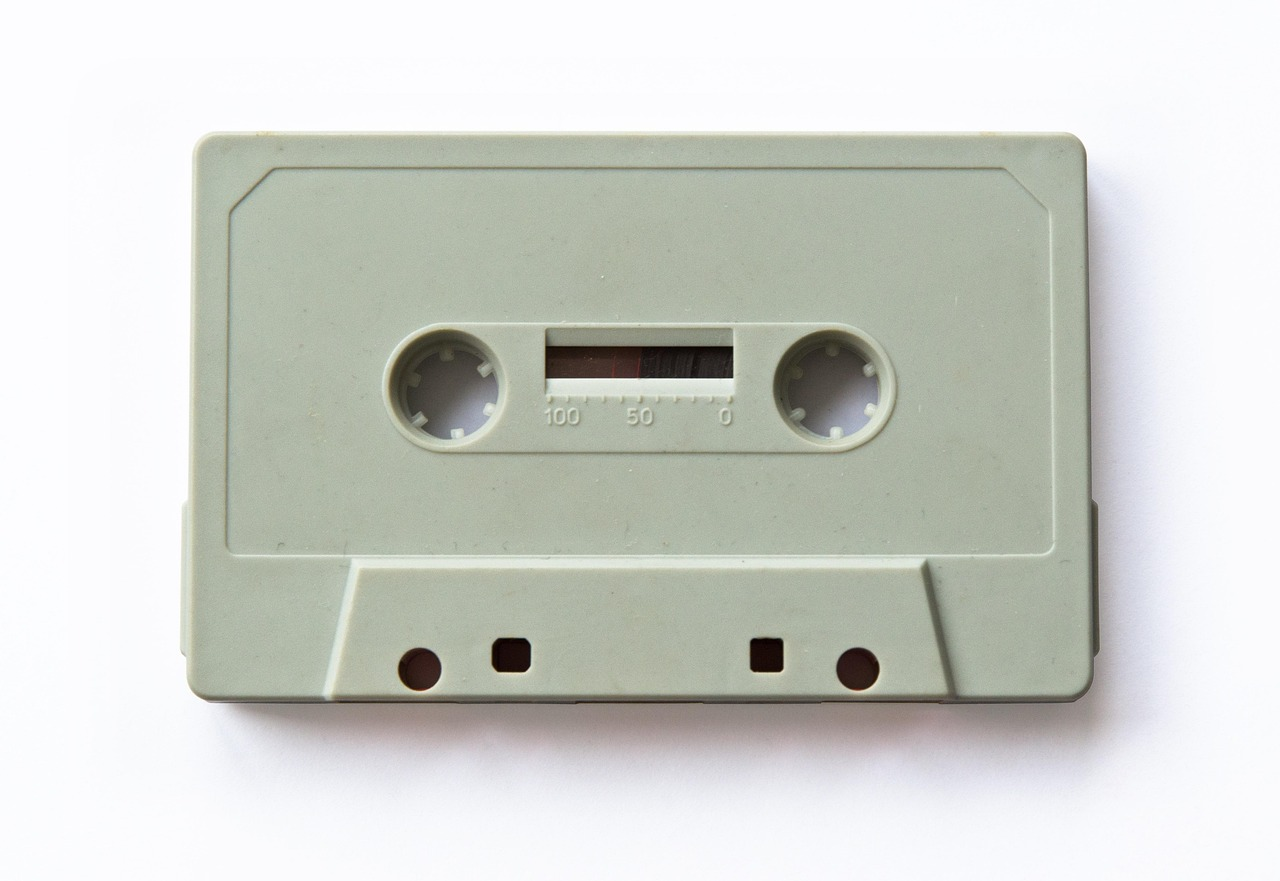
U-Matic tapes once represented the gold standard of professional video recording. From broadcast television and government documentation to university archives and corporate media, these ¾” cassettes captured decades of history. Today, however, many of those recordings are trapped on aging magnetic tape that is quietly and irreversibly failing.
Understanding U-matic tape transfer and restoration limits is now a practical necessity. Too often, tapes are discovered only after damage has progressed beyond recovery. At that point, even professional equipment and careful handling cannot prevent loss.
Today, we will go deep into when U-Matic tape restoration is no longer possible, why certain types of damage cannot be reversed, and how to recognize the warning signs early enough to preserve what remains.
What U-Matic Tapes Are Physically Made Of?
Every U-Matic tape consists of multiple layers, each vulnerable to age and environment:
- A polyester base film that gives the tape structure.
- A magnetic oxide layer that stores video and audio signals.
- Organic binders and lubricants that hold particles together and reduce friction.
Why does U-Matic Tape Degradation Accelerates After Decades?
U-matic tape degradation is driven primarily by time, humidity, and temperature fluctuations. Even tapes stored in seemingly acceptable conditions may experience:
- Moisture absorption into binders
- Hydrolysis that weakens adhesive properties
- Oxide particle shedding
- Gradual loss of signal integrity
Did You Know
Many U-Matic tapes begin degrading chemically long before playback problems become obvious. By the time issues are visible, damage is often well advanced.
What “Restoration” Can Realistically Achieve?
In the context of magnetic tape, restoration does not mean returning a tape to its original condition. Instead, it refers to limited, temporary measures designed to allow playback long enough to capture the signal.
These measures may include:
- Stabilizing tape tension
- Temporarily reducing moisture content
- Using professional playback decks and time base correction
What Restoration Can Never Reverse?
This is where U-matic tape restoration limits become critical. Restoration cannot:
- Rebuild lost magnetic oxide.
- Reverse chemical decay.
- Repair warped or shrunken base film.
- Recover the signal that no longer exists.
Sticky Shed Syndrome vs. Vinegar Syndrome in U-Matic
Sticky Shed Syndrome (Binder Breakdown)
Sticky Shed Syndrome occurs when the binder that holds magnetic particles absorbs moisture and begins to break down. Common symptoms include:
- Squealing during playback.
- Tape sticking to the video heads.
- Excessive residue buildup.
A controlled low-temperature “baking” process can sometimes reduce moisture temporarily. However, the effect is short-lived.
Pro Tip
Baking does not fix Sticky Shed Syndrome; it only creates a narrow window for playback. Once moisture returns, degradation resumes.
Vinegar Syndrome U-Matic Explained
Vinegar syndrome U-matic is far more severe. It affects the polyester base film itself, causing it to release acetic acid gas. Warning signs include:
- A strong vinegar odor.
- Tape shrinkage and brittleness.
- Warping that prevents smooth transport.
Unlike Sticky Shed Syndrome, vinegar syndrome is irreversible and self-accelerating.
Comparison: Sticky Shed vs. Vinegar Syndrome
| Factor |
Sticky Shed Syndrome |
Vinegar Syndrome U-Matic |
| Affected Layer |
Binder |
Polyester base |
| Odor |
Usually none |
Strong vinegar smell |
| Temporary Playback |
Sometimes |
Rare |
| Reversibility |
Temporary only |
None |
| Long-Term Outcome |
Progressive loss |
Structural failure |
How to Identify Unrecoverable U-Matic Damage?
#1 Physical Warning Signs
Some indicators suggest a tape has already reached unrecoverable U-matic damage:
- Tape sticking to itself inside the cassette.
- White powder or residue.
- Warped or rippled edges.
- Deformed cassette shells.
#2 Playback-Based Red Flags
During test playback, critical warning signs include:
- Immediate clogging of video heads.
- Complete loss of RF signal.
- Severe tracking instability.
- Audio dropouts across the entire recording.
When Digitization Is No Longer a Safe Option?
There comes a moment when attempting playback does more harm than good. This typically occurs when:
- Oxide loss exceeds recoverable thresholds.
- Vinegar syndrome reaches an advanced stage.
- Tape tears during threading.
- Contamination risks damage to professional decks.
Why Professional Equipment Has Limits?
High-end video decks and time base correctors are powerful tools, but they cannot:
- Recreate the missing signal.
- Compensate for physical tape loss.
- Eliminate mechanical stress during transport.
Why Early Digitization Matters More Than “Perfect” Recovery?
Waiting for ideal conditions often results in missed opportunities. In many cases, capturing imperfect footage early is far better than losing everything later.
Early digitization:
- Preserves the remaining signal.
- Stops further physical wear.
- Enables safe copying and storage.
This is especially important as U-matic tape degradation progresses quietly over time.
Closing Thoughts
U-Matic tapes were never designed to last half a century. The fact that so many still exist today is a testament to their importance, but also a warning. Understanding U-matic tape restoration limits is not about abandoning recovery; it is about recognizing when preservation must take precedence over experimentation.
As U-matic tape degradation advances, the margin for error narrows. In cases involving vinegar syndrome U-matic, or severe binder failure, the line between recoverable and unrecoverable U-matic damage is thin and easily crossed. Often, the final loss does not occur dramatically, but quietly, after one attempt too many.
The most successful preservation outcomes happen early, before damage becomes obvious. Acting at the first signs of decline protects what remains and ensures that historically significant footage survives, not perfectly, perhaps, but meaningfully. When it comes to aging U-Matic tapes, the true failure is not imperfect video. It is waiting until there is nothing left to save.