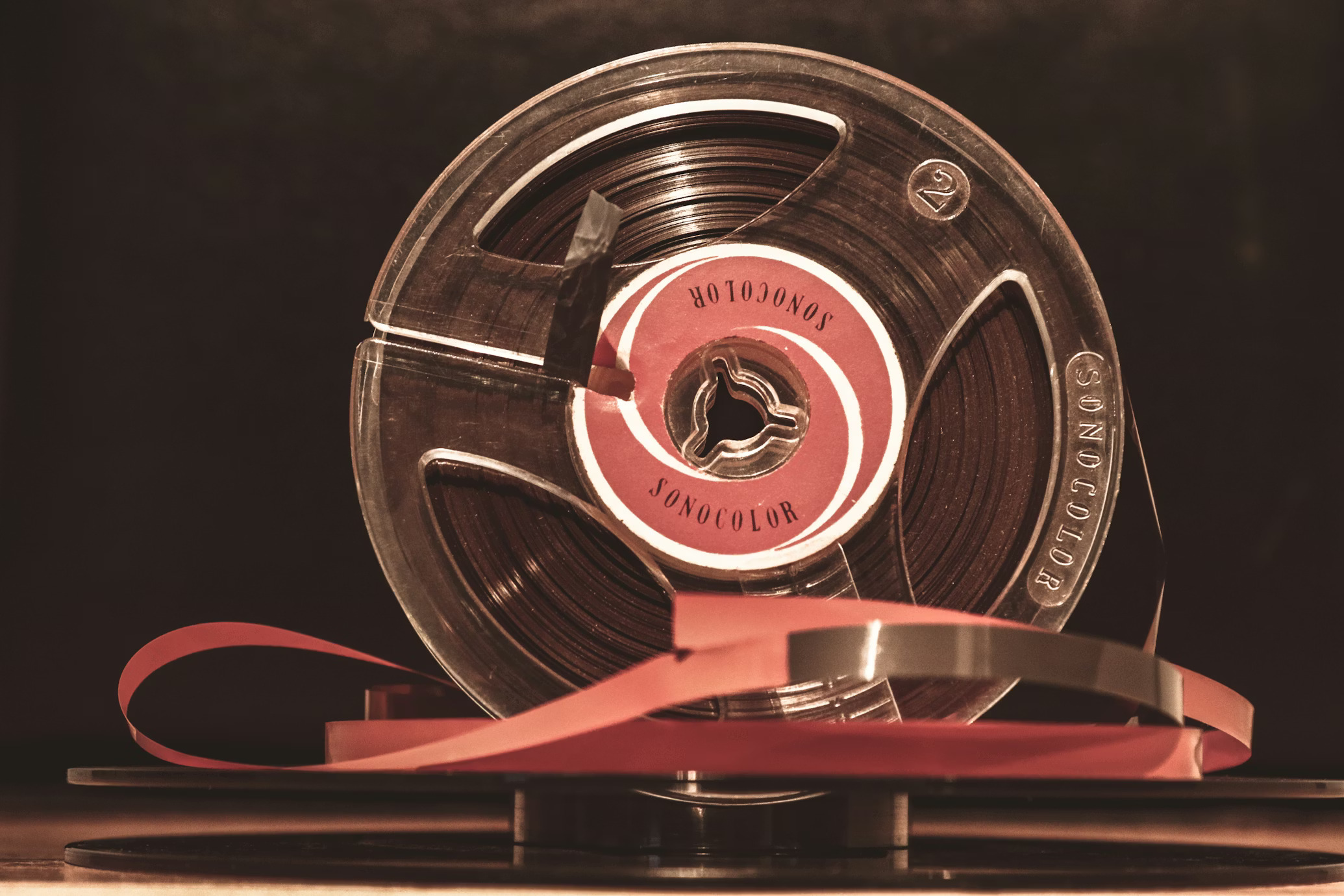
Somewhere in your attic or basement, a box of reel-to-reel tapes is slowly falling apart. They might hold a wedding toast from 1968, your grandfather’s jazz recordings, or a lecture that changed your career. Whatever is on them, time is running out.
Reel-to-reel tape was once the gold standard for high-fidelity recording. Studios, radio stations, and hobbyists relied on it. But magnetic tape degrades. The binder breaks down, oxide particles shed, and those recordings become unplayable.
The good news is that you can still convert reel to reel tapes to digital and preserve every note and whisper. Today, we cover everything from understanding your tapes to choosing the right open reel tape conversion service.
What Is Reel-to-Reel Audio Tape?
Reel-to-reel (also called open reel) is an analog format where magnetic tape winds between two spools on a deck. Unlike cassettes, the tape is exposed. This design allowed wider tape widths, faster speeds, and superior sound quality compared to any consumer format of its era.
Manufacturers like Ampex, Revox, Studer, and TASCAM produced machines from the late 1940s through the early 1990s. Professional studios used reel-to-reel almost exclusively until digital audio workstations replaced tape in the mid-1990s.
Common Reel-to-Reel Tape Specifications
| Specification |
Common Options |
| Tape Width |
1/4″, 1/2″, 1″, 2″ |
| Reel Diameter |
3″, 5″, 7″, 10.5″ |
| Tape Speed |
3.75, 7.5, 15, or 30 ips |
| Track Config |
Full-track mono, half-track stereo, quarter-track stereo, multi-track |
| Base Material |
Acetate (pre-1970) or polyester (post-1970) |
Did You Know?
A 10.5-inch reel at 7.5 ips holds roughly 45 minutes per pass. At 3.75 ips, the same reel holds about 90 minutes at lower fidelity. Speed during recording directly affects what you can recover during reel to reel digitizing.
Who Used Reel-to-Reel and What’s Typically on These Tapes?
Reel-to-reel touched nearly every corner of 20th-century audio culture.
- Recording studios: Album masters, demos, and multi-track mixes.
- Radio/TV stations: Broadcast archives, news reels, and syndicated programs.
- Government/military: Oral histories, training tapes, and field recordings.
- Houses of worship: Sermons, choir performances, and community events.
- Families: Home recordings, music dubbed from vinyl, and bedtime stories.
You may not know what each reel contains until you play it. That is why reel to reel audio transfer matters. When you digitize open-reel tapes, every recording becomes accessible again.
How Long Do Reel-to-Reel Tapes Last?
Under ideal conditions (60 to 70°F, 30 to 40% humidity, stored on edge), polyester tapes last 30 to 50 years. Acetate tapes become brittle within 15 to 25 years. Most tapes have not been stored ideally.
Binder Hydrolysis (Sticky Shed Syndrome)
The polyurethane binder absorbs moisture over time. This turns the binder gummy, causing oxide to stick to playback heads. The result: squealing, speed fluctuations, and permanent oxide loss.
Acetate Base Deterioration
Acetate tapes shrink and release a vinegar-like odor (“vinegar syndrome”). Once this starts, the tape can crack during playback.
💡
Pro Tip
If your tapes smell like vinegar or feel sticky, do not play them. A professional reel to reel audio transfer service can handle damaged media safely and prevent further destruction.
DIY Reel-to-Reel Digitizing: What You Need
Some enthusiasts prefer to digitize open-reel tapes at home. If tapes are in good condition and you have the right gear, DIY reel to reel digitizing is possible.
| Equipment |
Purpose |
Est. Cost |
| Reel-to-reel deck |
Plays original tape |
$300 to $2,000+ |
| Audio interface |
Analog-to-digital conversion |
$100 to $500 |
| RCA/XLR cables |
Connects the deck to the interface |
$10 to $50 |
| Recording software |
Captures digital audio |
Free to $250/yr |
| Calibration tape |
Verifies alignment/speed |
$75 to $200 |
Set your software to 96 kHz / 24-bit for archival quality. Save raw files as WAV or FLAC. Export reel to reel to MP3 copies for everyday listening.
Challenges of DIY Reel Conversion
While DIY can work for tapes in good shape, the process has real technical pitfalls that compromise results.
Speed Calibration
Older decks drift out of calibration over time. If the playback speed is even slightly off, pitch and timing shift. A tape recorded at 7.5 ips playing back at 7.3 ips sounds noticeably flat. Without a calibration tape, you may not realize the speed is wrong.
Head Alignment (Azimuth)
Misaligned azimuth causes high-frequency loss and dull audio. Each tape may have been recorded on a different machine.
Sticky Shed Baking
Tapes with sticky shed need baking at 130 to 140°F for 6 to 12 hours before safe playback. Too much heat damages the tape permanently.
Track Configuration Uncertainty
A quarter-track tape on a half-track machine picks up adjacent tracks, creating crosstalk. You must match the playback head to the recording format.
Myth Busted
Any working deck can digitize any reel.” False. Heads, widths, speeds, and EQ curves (NAB vs. IEC) must match the original recording. Professional open reel tape conversion services maintain multiple calibrated machines for every format
What a Professional Reel-to-Reel Transfer Service Does
When you convert reel to reel tapes to digital through a professional service, you get specialized equipment, trained technicians, and quality control that DIY cannot match.
At Smooth Photo Scanning, the process starts when tapes arrive at the secure facility in Lodi, NJ. Each reel is labeled, logged, and inspected.
- Damage inspection and repair: Technicians check for sticky shed, splices, and oxide shedding.
- Real-time transfer: Each tape plays in real time on professional decks.
- Audio optimization: Background hissing removed, volume balanced, playback levels adjusted.
- Blank space trimming: Dead air at the start and end is cut.
- Custom file naming: Files labeled by tape label or your instructions.
- Flexible delivery: Flash drive, hard drive, or digital download.
Professional reel to reel digitizing removes all guesswork. A dedicated open reel tape conversion service handles every variable for you.
💡
Pro Tip
Smooth Photo Scanning offers free shipping for orders over $250 and free pickup for orders over $500 in the NYC Tri-State area.
Output Formats: WAV, FLAC, MP3 – Which Should You Choose?
After your reel to reel audio transfer is complete, pick a format that fits your needs.
| Format |
Compression |
Quality |
Best For |
| WAV |
Uncompressed |
Lossless |
Archival masters |
| FLAC |
Lossless |
Identical to WAV |
Storage, audiophiles |
| MP3 |
Lossy |
Good at 320 kbps |
Sharing, portability |
| Apple Lossless |
Lossless |
Identical to WAV |
Apple users |
Request WAV or FLAC as your archival copy, then create reel to reel to MP3 versions for everyday use. Smooth Photo Scanning delivers MP3 as standard, with WAV, FLAC, and Apple Lossless on request. You can convert reel to reel tapes to digital in any format.
Ship Your Reel-to-Reel Tapes for Professional Transfer
Every day you wait, your tapes lose a little more. Binder hydrolysis does not pause. Oxide shedding does not reverse. The recordings your family trusted to magnetic tape decades ago are on borrowed time.
For most people, a professional open-reel tape conversion service is the safest path. Smooth Photo Scanning has helped thousands of clients digitize open reel tapes, cassettes, video, film, and photos at their secure facility in Lodi, NJ.
Ready to convert reel to reel tapes to digital? Visit smoothphotoscanning.com to place your order online or call to discuss your project. Free shipping for orders over $250.